AI Cloud Infrastructure: A Complete Guide for CPG Enterprises
The consumer packaged goods industry stands at a critical inflection point where traditional infrastructure approaches can no longer support the velocity and complexity of modern retail operations. Between managing trade promotion budgets that span multiple retailers, orchestrating category management initiatives across diverse product portfolios, and responding to real-time shifts in demand forecasting, CPG enterprises face computational and analytical demands that legacy systems simply cannot meet. The convergence of artificial intelligence and cloud computing has created new pathways for companies like Procter & Gamble and Unilever to transform how they process scan data, optimize shelf velocity, and execute merchandising strategies at scale.
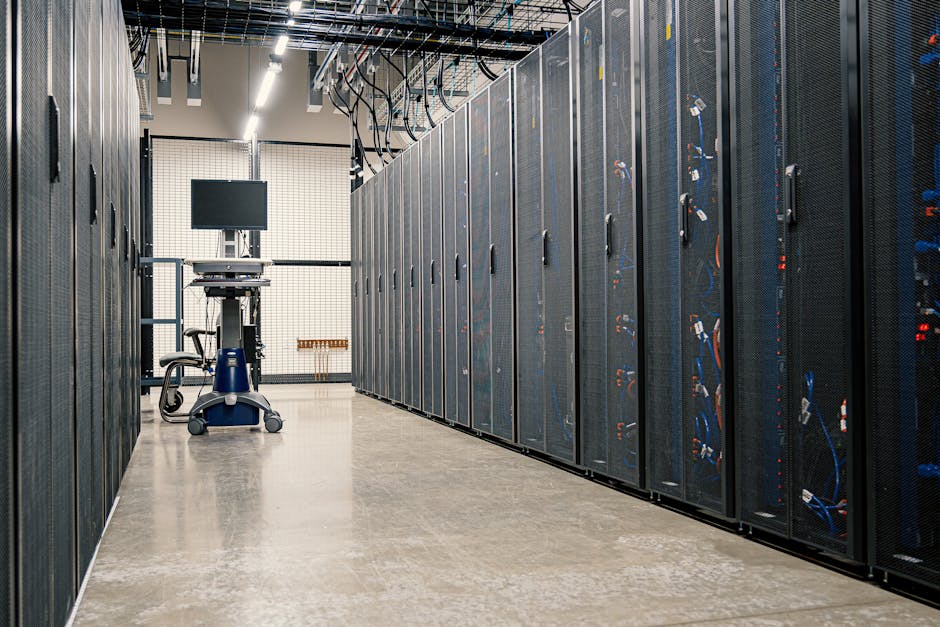
Understanding AI Cloud Infrastructure begins with recognizing that it represents far more than simply moving existing workloads to cloud platforms. For CPG practitioners managing trade fund allocation or conducting incrementality testing, this infrastructure paradigm delivers elastic computational resources that scale dynamically with analytical demands, machine learning capabilities that enhance promotional lift predictions, and data integration frameworks that consolidate insights from EDI feeds, retailer collaboration portals, and in-store execution monitoring systems. When a category manager needs to process millions of transaction records to identify optimal assortment strategies, or when a trade promotion manager must evaluate thousands of promotional scenarios to maximize ROAS, AI Cloud Infrastructure provides the computational foundation that makes these analyses both feasible and fast.
What AI Cloud Infrastructure Actually Means for CPG Operations
At its core, AI Cloud Infrastructure combines three foundational elements that directly address CPG operational requirements. First, cloud computing platforms provide virtually unlimited computational and storage capacity that expands or contracts based on workload demands. During peak planning cycles—such as annual trade promotion budget planning or new product launch preparation—infrastructure scales to accommodate intensive analytical processing. During quieter operational periods, resources scale down to optimize costs. This elasticity proves particularly valuable for CPG enterprises that experience pronounced seasonal fluctuations in promotional activity and demand forecasting requirements.
Second, integrated artificial intelligence and machine learning services transform how practitioners extract insights from the massive datasets inherent to CPG operations. Cloud TPM Solutions leverage these AI capabilities to analyze historical promotional performance, identify patterns in promotional lift across different retail channels, and recommend optimal trade fund allocation strategies. Rather than relying on manual analysis of spreadsheet-based scan data, category managers can deploy machine learning models that continuously learn from new transaction data, refining their understanding of which promotional mechanics drive incremental volume versus simply shifting timing of purchases consumers would have made regardless.
Third, comprehensive data integration and pipeline orchestration capabilities enable CPG enterprises to consolidate information from disparate sources into unified analytical environments. Retail partnerships generate data through multiple channels: EDI transactions provide shipment and invoice details, retailer portals deliver syndicated scan data and inventory positions, field teams report in-store execution compliance through mobile applications, and consumer research generates attitudinal and behavioral insights. AI Cloud Infrastructure provides the frameworks to ingest, cleanse, harmonize, and analyze these diverse data streams, creating the single source of truth that effective trade promotion management and category management demand.
Why This Infrastructure Transformation Matters Now
The imperative for AI Cloud Infrastructure adoption stems from fundamental shifts in how CPG companies compete and operate. Retail consolidation has concentrated purchasing power among fewer, larger retailers who demand increasingly sophisticated collaboration on category insights, promotional planning, and strategic pricing optimization. Meeting these expectations requires analytical capabilities that far exceed what traditional on-premises systems can deliver. When a major retailer requests joint business planning based on granular shopper-level analytics or asks for real-time promotional performance dashboards, CPG manufacturers need infrastructure that can process and visualize massive datasets without latency.
Simultaneously, the proliferation of sales channels has fragmented the path to purchase in ways that complicate demand forecasting and merchandising execution. Consumers now engage with CPG brands through traditional grocery, mass merchandise, club, dollar, convenience, drug, e-commerce pure-plays, and omnichannel retailers—each with distinct promotional calendars, assortment expectations, and pricing dynamics. Optimizing trade spend across this complex channel landscape requires computational power to model countless scenarios and AI capabilities to identify patterns that human analysts might miss. Organizations implementing AI solution development frameworks can systematically build these capabilities while maintaining governance and scalability.
The competitive dynamics of new product launches have also intensified infrastructure requirements. Successful launches demand precise coordination across supply chain, trade promotion, merchandising execution, and marketing activation—all informed by AI Demand Forecasting that predicts velocity curves and identifies optimal distribution strategies. Cloud infrastructure enables the real-time collaboration and data sharing that synchronizes these cross-functional efforts, while AI models refine launch forecasts as initial market data becomes available, allowing rapid course corrections that maximize launch success rates.
Core Components CPG Practitioners Should Understand
Computational and Storage Foundations
Modern cloud platforms provide several computational paradigms relevant to CPG analytics. Virtual machines offer familiar server environments suitable for migrating existing TPM applications with minimal refactoring. Container-based architectures enable more efficient resource utilization and faster deployment cycles for analytical microservices. Serverless computing allows developers to build event-driven workflows—such as automated promotional performance alerts triggered when actual lift deviates from forecasts—without managing underlying infrastructure. For storage, cloud platforms distinguish between hot storage for frequently accessed data like current-year scan data, warm storage for historical promotional archives used in model training, and cold storage for long-term retention of transactional records required for compliance or deep historical analysis.
AI and Machine Learning Services
Cloud providers offer extensive catalogs of pre-built AI services and machine learning frameworks. Pre-built services deliver capabilities like demand forecasting, anomaly detection in promotional performance, and natural language processing for analyzing retailer feedback or consumer reviews—all without requiring deep data science expertise. For more specialized applications like promotional lift modeling or shelf optimization, cloud platforms provide managed machine learning environments where data scientists can develop custom models using frameworks like TensorFlow or PyTorch, then deploy those models into production environments that automatically scale to handle prediction volumes.
Data Integration and Analytics Pipelines
Effective use of AI Cloud Infrastructure requires robust data pipelines that move information from source systems into analytical environments. Cloud platforms provide ETL (Extract, Transform, Load) services that can ingest data from EDI feeds, retailer portals, ERP systems, and CRM platforms, then cleanse and harmonize that data into consistent formats. Data warehousing services optimized for analytical queries enable category managers to run complex analyses across years of historical transactions in seconds rather than hours. Real-time streaming capabilities allow companies to monitor in-store execution or e-commerce performance and trigger immediate responses when metrics deviate from plans.
Getting Started: A Practical Roadmap for CPG Organizations
Beginning an AI Cloud Infrastructure journey requires strategic planning rather than wholesale migration. Most successful CPG implementations start with specific, high-value use cases that demonstrate clear ROI while building organizational capabilities. Trade promotion optimization often serves as an ideal starting point because it combines data-intensive analytics, clear success metrics (improved promotional ROAS), and direct impact on profitability. A pilot project might focus on a single category or retail partner, using cloud infrastructure to analyze promotional lift across different mechanics, predict optimal discount depths, and recommend trade fund allocation that maximizes incremental volume.
Before launching pilots, organizations must establish foundational governance around data security, access controls, and compliance. CPG companies handle sensitive information including retailer-specific pricing, promotional terms, and consumer data that demands rigorous protection. Cloud platforms provide comprehensive security capabilities including encryption, identity management, and audit logging, but these must be properly configured according to industry requirements and internal policies. Establishing clear data classification schemes, defining who can access different data types, and implementing approval workflows for moving data to cloud environments creates the governance foundation that enables confident scaling.
Building internal capabilities represents another critical early-stage priority. While cloud platforms simplify many technical aspects of infrastructure management, organizations still need practitioners who understand how to architect solutions, develop analytical pipelines, and operationalize AI models. This may involve upskilling existing IT and analytics teams through cloud certification programs, partnering with system integrators who bring CPG domain expertise alongside cloud technical knowledge, or hiring talent with relevant experience. Creating centers of excellence that combine cloud architects, data engineers, and category or trade promotion subject matter experts helps ensure solutions address real business needs rather than being technology for technology's sake.
Addressing Common Concerns and Misconceptions
CPG organizations evaluating AI Cloud Infrastructure often express concerns about costs, security, and organizational disruption. Regarding costs, while cloud computing does introduce ongoing operational expenses, total cost of ownership analyses typically favor cloud approaches when accounting for eliminated capital expenditures on data center hardware, reduced IT staffing for infrastructure management, and improved business outcomes from better analytics. Cloud pricing models also align costs with actual usage—during periods of lower analytical activity, expenses decrease proportionally.
Security concerns merit serious consideration but cloud platforms generally offer security capabilities superior to what most enterprises can implement on-premises. Major cloud providers invest billions in security infrastructure, employ thousands of security specialists, and maintain certifications for rigorous compliance standards relevant to CPG operations. The shared responsibility model clarifies that while cloud providers secure the underlying infrastructure, customers remain responsible for properly configuring access controls and protecting their data—making governance and configuration management critical success factors.
Organizational change management often presents the most significant implementation challenge. Moving to AI Cloud Infrastructure changes how IT teams work, how analytics professionals access data, and how business practitioners consume insights. Successful transformations invest in change management that helps people understand not just what is changing but why the change benefits them personally. For a trade promotion manager, emphasizing how Promotional Lift Analytics powered by cloud AI can reduce time spent on manual analysis while improving promotional recommendations makes the change personally relevant rather than an abstract technology shift.
Conclusion: Building the Foundation for Competitive Advantage
AI Cloud Infrastructure represents the technological foundation that will separate CPG industry leaders from laggards over the coming decade. Organizations that master this infrastructure will execute trade promotion management with precision that maximizes ROAS, optimize assortments based on comprehensive category insights, and forecast demand with accuracy that minimizes out-of-stocks while avoiding excess inventory. Those that delay adoption will find themselves increasingly disadvantaged in retailer negotiations, unable to deliver the analytical collaboration that major accounts demand, and outmaneuvered by competitors who leverage data more effectively. The journey begins with understanding what AI Cloud Infrastructure truly offers, identifying specific use cases where it delivers measurable value, and building the governance and capabilities that enable confident scaling. For CPG practitioners ready to move beyond pilots into broader transformation, exploring comprehensive approaches like AI Trade Promotion Optimization provides frameworks for systematically enhancing promotional effectiveness while building organizational maturity in AI-driven decision-making.


Comments
Post a Comment