AI-Driven Mobility: Five Critical Trends Reshaping Autonomous Vehicles by 2030
The automotive landscape is undergoing its most profound transformation since the introduction of the assembly line. As we approach the midpoint of the 2020s, the convergence of artificial intelligence, connected vehicle technologies, and autonomous systems is accelerating at a pace that has caught even industry veterans by surprise. What once seemed like distant science fiction—vehicles that perceive, learn, and navigate complex urban environments without human intervention—is now entering commercial deployment across multiple markets. The shift toward intelligent mobility represents not merely an incremental improvement in vehicle capabilities, but a fundamental reimagining of how transportation systems function, how vehicles interact with infrastructure, and how automotive companies architect their engineering organizations.
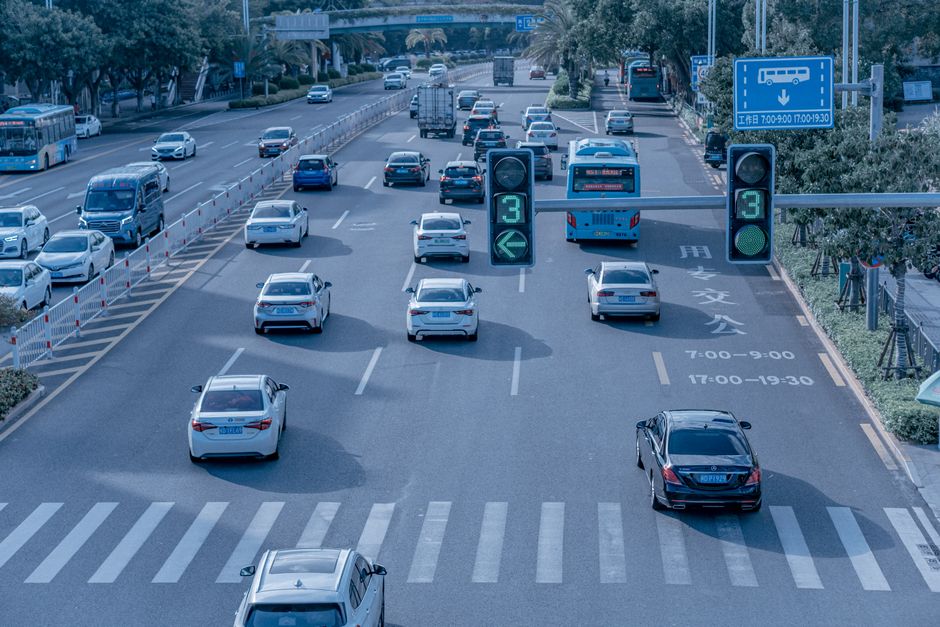
The acceleration of AI-Driven Mobility is being propelled by breakthrough developments in machine learning architectures, improvements in computational efficiency at the edge, and the maturation of sensor technologies that can operate reliably across diverse environmental conditions. Companies like Waymo have now logged tens of millions of autonomous miles, generating datasets that fuel increasingly sophisticated neural networks. Meanwhile, traditional OEMs including Ford and General Motors are rapidly transitioning from hardware-first organizations to software-defined vehicle platforms, investing billions in AI talent acquisition and digital twin development capabilities. The next three to five years will determine which architectural choices, regulatory frameworks, and business models will dominate the autonomous era.
The Evolution of Sensor Fusion AI and Perception Systems
One of the most significant trends shaping the future of AI-Driven Mobility is the rapid advancement in Sensor Fusion AI, where multiple data streams from LIDAR, radar, cameras, and ultrasonic sensors are synthesized in real-time to create a comprehensive environmental model. The traditional approach of processing each sensor modality independently and then fusing results at a late stage is giving way to early and intermediate fusion architectures powered by transformer-based neural networks. These systems can learn cross-modal correlations that humans never explicitly programmed—for instance, understanding that a particular radar signature combined with a specific visual pattern indicates a cyclist about to merge into traffic.
By 2028, we anticipate that perception systems will routinely achieve superhuman performance in adverse conditions that currently challenge even the best ADAS engineering teams. Tesla's vision-first approach has demonstrated that camera-based systems can reach impressive capabilities, but the industry consensus is converging on multi-modal architectures that leverage the complementary strengths of each sensor type. LIDAR costs have dropped by an order of magnitude over the past five years, making solid-state units economically viable for high-volume production vehicles. This cost reduction is unlocking new architectural possibilities where redundancy and diversity in sensing modalities provide the safety margins required for NHTSA compliance at higher autonomy levels.
Next-Generation LIDAR and Imaging Radar
The sensor hardware itself is evolving rapidly. Next-generation imaging radar systems can now resolve individual objects with angular precision approaching that of LIDAR, while maintaining radar's inherent advantages in weather penetration and velocity measurement. Meanwhile, LIDAR manufacturers are pushing beyond the 200-meter range barrier and achieving point densities that enable detailed object classification at highway speeds. These hardware improvements are creating new demands on the AI systems that process sensor data. The volume of information generated by modern sensor suites can exceed multiple gigabytes per second, requiring novel compression algorithms and attention mechanisms that intelligently filter for safety-critical features while discarding redundant data.
Vehicle-to-Everything Communication and Distributed Intelligence
While much attention has focused on the autonomous capabilities of individual vehicles, the second major trend reshaping AI-Driven Mobility is the emergence of V2X communication as a critical enabler of safe, efficient autonomy. The vision of connected vehicles sharing real-time information about road conditions, traffic patterns, and potential hazards is finally transitioning from pilot projects to production deployment. BMW and other European manufacturers are leading the integration of cellular V2X technology, while the North American market debates the relative merits of DSRC versus 5G-based approaches.
The truly transformative aspect of V2X is not simply vehicle-to-vehicle messaging, but the creation of a distributed intelligence layer where AI algorithms operating in vehicles, edge computing nodes, and cloud infrastructure collaborate to optimize mobility outcomes at a system level. When an autonomous vehicle encounters an unusual road condition—construction equipment partially blocking a lane, for instance—that information can be immediately shared with approaching vehicles and incorporated into cloud-based routing algorithms that divert traffic preemptively. This creates a collective learning effect where the fleet becomes progressively smarter as more vehicles join the network and contribute observations.
Infrastructure Integration and Smart Cities
Looking toward 2030, we expect significant progress in integrating autonomous vehicles with smart city infrastructure. Traffic signals that communicate phase and timing information, parking structures that negotiate with vehicles seeking spaces, and specialized AI solutions that dynamically adjust road capacity allocation based on real-time demand—these capabilities require standardized communication protocols and AI systems capable of multi-agent coordination. The technical challenges are formidable, particularly around ensuring cybersecurity and preventing spoofing attacks, but the efficiency gains and safety improvements motivate continued investment.
Edge Computing Architecture and On-Vehicle AI Processing
The third critical trend is the shift toward more powerful edge computing capabilities within vehicles themselves. Current production autonomous systems typically rely on centralized domain controllers running AI inference on specialized hardware accelerators. The computational requirements are substantial—achieving real-time performance for modern perception and planning algorithms can require hundreds of TOPS (Tera Operations Per Second) of compute capacity. As AI models grow more sophisticated and sensor resolution increases, these requirements will only intensify.
The industry is responding with purpose-built automotive AI accelerators from suppliers like NVIDIA, Qualcomm, and emerging semiconductor companies focused specifically on automotive applications. These chips incorporate dedicated tensor processing units, hardware-accelerated video codecs, and safety features like lockstep execution and memory error correction required for ASIL-D certification. By 2029, we anticipate that flagship autonomous vehicles will contain computing systems with performance exceeding 2,000 TOPS, approaching the computational capacity of current data center servers—all operating within the thermal and power constraints of automotive environments.
Software-Defined Vehicles and OTA Updates
This explosion in computational capability enables a software-defined vehicle architecture where functionality is increasingly determined by algorithms rather than hardware. OTA updates become the mechanism for continuously improving vehicle capabilities, fixing edge cases discovered in fleet data, and deploying new features without requiring physical service appointments. Tesla has demonstrated the viability of this model, but implementing it at traditional OEMs requires organizational transformation and new approaches to validation and safety assurance.
Regulatory Evolution and Safety Frameworks for Autonomous Systems Integration
The fourth major trend is the maturation of regulatory frameworks specifically designed for AI-based autonomous systems. Current regulations were written for human drivers and translate awkwardly to autonomous systems. NHTSA and equivalent agencies globally are developing new assessment methodologies that focus on scenario-based validation, statistical safety arguments based on fleet performance, and ongoing monitoring rather than one-time type approval.
The challenge is that AI systems based on deep learning are inherently probabilistic and can exhibit unexpected behaviors in corner cases not represented in training data. Autonomous Systems Integration teams at major OEMs are investing heavily in simulation environments and formal verification techniques to provide safety assurance arguments that satisfy regulators while enabling deployment. By 2028, we expect harmonized international standards for autonomous vehicle safety validation, reducing the current fragmentation where different markets impose incompatible requirements.
Liability Frameworks and Insurance Models
Parallel to technical regulation, legal frameworks around liability are evolving. When an autonomous vehicle is involved in an accident, who bears responsibility—the vehicle owner, the OEM, the AI algorithm developer, or the sensor supplier? Several jurisdictions are implementing statutory frameworks that clarify these questions, generally placing primary liability on vehicle manufacturers for faults in autonomous operation. This is driving fundamental changes in insurance models, with OEMs purchasing coverage on behalf of vehicle owners and pricing it into vehicle purchase or subscription costs. These business model implications are as significant as the technical challenges.
Personalization and Predictive AI in Mobility Services
The fifth trend reshaping AI-Driven Mobility is the application of AI to customer experience personalization and the emergence of Mobility as a Service business models. Autonomous vehicles will spend far less time parked and more time in active service, whether transporting their owner, operating in ride-hailing fleets, or providing last-mile delivery services. This shift creates opportunities for AI systems that predict demand patterns, optimize vehicle positioning, and personalize the in-cabin experience based on passenger preferences.
General Motors' Cruise and Ford's autonomous service pilots are experimenting with these concepts, using AI-driven predictive maintenance to maximize vehicle uptime and machine learning models to forecast demand at different times and locations. The ability to position vehicles where they will be needed before requests arrive improves service quality and fleet utilization. Similarly, AI-powered personalization can adjust climate control, entertainment options, and routing preferences based on learned passenger behavior—creating differentiated experiences that build customer loyalty in what might otherwise become a commoditized transportation service.
Integration with Multi-Modal Transportation Networks
Looking toward 2030, AI-Driven Mobility increasingly means integration with broader transportation networks. An autonomous vehicle becomes one component in a journey that might also include electric scooters, public transit, and pedestrian segments. AI systems that optimize across these modes, considering factors like cost, time, environmental impact, and user preferences, will enable seamless multi-modal transportation. This requires data sharing and coordination across operators that have historically competed, presenting both technical integration challenges and business model questions around revenue sharing and customer ownership.
Conclusion
The trajectory of AI-Driven Mobility over the next three to five years will be shaped by these converging trends: breakthrough advances in perception through improved Sensor Fusion AI, the emergence of V2X and distributed intelligence, massive increases in on-vehicle computing power, evolving regulatory frameworks that enable deployment while ensuring safety, and the transformation of automotive business models toward service-based offerings. Companies that successfully navigate these shifts—integrating advanced AI capabilities while managing the organizational transformation required to become software-defined businesses—will lead the autonomous era. The technical challenges remain substantial, particularly around edge case handling and safety assurance for AI systems, but the progress achieved over the past five years suggests that widespread deployment of highly capable autonomous vehicles is not a question of if, but when. For organizations looking to accelerate their capabilities in this space, investing in AI Agent Development expertise and building the infrastructure to support continuous learning from fleet data will be essential competitive advantages. The automotive industry's transformation has only just begun, and the pace of change will continue to accelerate as AI capabilities compound and deployment scales.


Comments
Post a Comment