Generative AI Deployment in Manufacturing: Complete FAQ Guide
Manufacturing leaders increasingly recognize generative AI's transformative potential, yet many organizations hesitate at the implementation threshold, uncertain about practical considerations, technical requirements, and realistic expectations. Unlike previous technology waves where manufacturing could adopt proven solutions from other industries, generative AI's application in industrial settings presents unique challenges—integrating with decades-old equipment, operating in environments hostile to delicate electronics, and meeting reliability standards where downtime costs millions per hour. These concerns generate countless questions from manufacturing professionals evaluating AI initiatives, from C-suite executives assessing strategic investments to plant engineers responsible for day-to-day implementation.
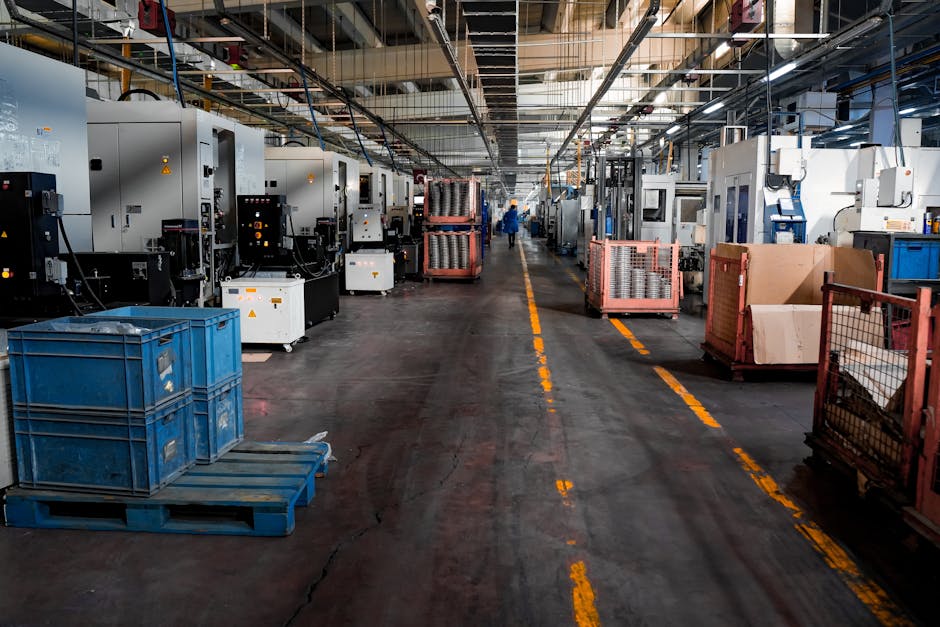
This comprehensive FAQ addresses the most common—and most critical—questions about Generative AI Deployment in manufacturing environments. Organized from foundational concepts through advanced implementation considerations, these questions and answers draw from real-world deployments across process and discrete manufacturing, reflecting lessons learned by organizations ranging from automotive suppliers to pharmaceutical manufacturers. Whether you're just beginning to explore AI's potential or refining an existing deployment strategy, this guide provides practical answers grounded in manufacturing realities.
Foundational Questions: Understanding Generative AI in Manufacturing Context
What exactly is generative AI, and how does it differ from traditional manufacturing automation?
Generative AI refers to machine learning models capable of creating new content, predictions, or solutions rather than simply executing predefined rules. In manufacturing, this means systems that can generate optimized production schedules accounting for hundreds of constraints, create synthetic sensor data to train predictive maintenance models when real failure examples are scarce, or design process parameters for new products based on similar historical runs. Traditional automation follows explicit instructions—if sensor reading X exceeds threshold Y, then execute action Z. Generative models learn patterns from data and can propose novel solutions to problems they've never explicitly encountered, making them particularly valuable for complex optimization challenges where rule-based approaches become unmanageable.
Why should manufacturing companies invest in Generative AI Deployment now rather than waiting for the technology to mature?
First-movers in manufacturing AI are establishing significant competitive advantages. Companies like GE Digital report 20-30 percent reductions in unplanned downtime through AI-driven predictive maintenance, while Siemens has documented 15-25 percent improvements in OEE through AI-optimized production scheduling. Beyond direct operational benefits, early adopters are building institutional knowledge and data infrastructure that compounds over time—the more production cycles an AI system observes, the better its predictions and optimizations become. Delaying implementation means competitors accumulate this learning advantage while you remain static. Additionally, current labor market conditions make AI-augmented operations increasingly necessary as experienced manufacturing engineers retire and skilled worker shortages persist across the industry.
What types of manufacturing problems are best suited for generative AI approaches?
Generative AI excels in three problem categories common in manufacturing. First, prediction problems with complex patterns—forecasting equipment failures based on subtle sensor signatures that human operators miss, or predicting quality outcomes from process parameter combinations too numerous for traditional statistical process control. Second, optimization problems with massive solution spaces—production scheduling across hundreds of machines and thousands of orders, or Supply Chain Optimization balancing inventory costs, lead time variability, and service level requirements. Third, generation problems where creating synthetic examples provides value—generating training data for defect detection when real defects are rare, or creating maintenance scenarios for training operators when practicing on actual equipment is too costly or risky.
Technical Implementation Questions
What data infrastructure prerequisites must be in place before starting Generative AI Deployment?
Successful AI implementation requires three data infrastructure layers. The connectivity layer captures data from production equipment—this includes modern IoT sensors but also interfaces to legacy PLCs, SCADA systems, and CNC controllers that may use proprietary protocols. Manufacturers typically need industrial gateways that translate between OT and IT protocols while providing edge processing capability. The storage layer must handle both time-series data from continuous processes and event-based data from discrete manufacturing, requiring databases optimized for high-frequency writes and time-range queries—solutions like OSIsoft PI System or Honeywell Uniformance serve this role. The contextualization layer enriches raw sensor data with manufacturing context—which product was being produced, what shift was operating, environmental conditions, and equipment maintenance history. Without this context, AI models struggle to distinguish normal variation from significant patterns.
How do we integrate generative AI with existing MES and ERP systems?
Integration follows the ISA-95 reference architecture that defines manufacturing system layers. Generative AI typically operates at Level 3 (manufacturing operations management) or Level 4 (business planning and logistics), receiving data from lower levels and providing recommendations or automated decisions back down. Modern MES platforms from vendors like Rockwell Automation and Honeywell provide REST APIs and OPC UA interfaces that simplify integration, enabling AI systems to query production schedules, equipment status, and quality data while writing back predicted maintenance windows or optimized parameters. ERP integration usually occurs through batch data exchanges—nightly extracts of order books, inventory positions, and procurement lead times that inform AI-driven planning models. Real-time ERP integration remains less common due to transaction system performance concerns, though emerging architectures using event streaming platforms like Kafka are enabling more continuous synchronization.
What computing infrastructure is required—cloud, on-premises, or edge deployment?
Most manufacturing AI deployments employ hybrid architectures. Cloud infrastructure handles model training, which requires substantial computational resources but occurs periodically rather than continuously. Training complex generative models on historical data might run weekly or monthly, making cloud burst capacity cost-effective compared to maintaining underutilized on-premises GPU clusters. However, inference—applying trained models to make predictions or optimizations—increasingly runs on-premises or at the edge for several reasons. Latency-sensitive applications like real-time quality control or process parameter adjustment require sub-second response times that cloud round-trips cannot reliably deliver. Data sovereignty concerns and intellectual property protection lead many manufacturers to keep production data within their facilities. Network reliability issues mean critical systems cannot depend on internet connectivity. Edge deployment using industrial PCs with NVIDIA Jetson or Intel Movidius accelerators enables running generative models directly on the shop floor, with periodic model updates from centralized training infrastructure.
Practical Deployment and Operations Questions
How long does typical Generative AI Deployment take from concept to production?
Timeline varies significantly by application complexity and organizational readiness. Proof-of-concept projects targeting specific use cases—predicting failures for a single equipment type or optimizing a constrained production line—typically require 3-6 months including data collection, model development, and validation. These pilots prove technical feasibility and business value but run in parallel with production systems, not controlling actual operations. Moving from pilot to production where AI systems make or recommend actual operational decisions adds another 6-12 months for integration with existing systems, change management, operator training, and establishing monitoring and governance processes. Enterprise-wide deployments across multiple facilities or production lines extend to multi-year journeys, though value accrues incrementally as each phase completes. Organizations with mature Manufacturing Analytics practices and modern data infrastructure can compress these timelines significantly, while those requiring substantial infrastructure investment may need longer preparation phases.
What internal skills and roles are needed to support AI initiatives?
Successful manufacturing AI requires blending data science expertise with deep manufacturing domain knowledge. Data scientists or machine learning engineers who understand algorithms and model development are essential but insufficient—they must partner with manufacturing engineers, process engineers, and quality engineers who know what patterns are physically meaningful versus spurious correlations. Many manufacturers are developing hybrid roles: process engineers with machine learning training, or data scientists embedded in manufacturing organizations who develop domain expertise over time. Beyond technical development, MLOps engineers manage model deployment pipelines, monitoring, and updates. Change management specialists help shop floor personnel adapt to AI-augmented workflows. Organizations typically start by hiring or contracting several specialized roles, then gradually build internal capability through training and knowledge transfer. Companies should budget for ongoing AI development partnerships during early phases while internal expertise develops, transitioning to vendor relationships focused on platform support rather than full implementation as organizational capabilities mature.
How do we measure ROI and business value from AI deployments?
Manufacturing AI ROI should align with core operational KPIs. Predictive maintenance value comes from reduced unplanned downtime—calculate current downtime costs including lost production, expedited repairs, and safety incidents, then measure the reduction after AI implementation, typically 20-40 percent for effective systems. Quality optimization value derives from reduced scrap, rework, and warranty costs—track defect rates and cost of poor quality before and after deployment. Production optimization measures include OEE improvements, capacity utilization increases, and inventory reduction from better demand forecasting. However, capturing full value requires measuring second-order benefits: reduced expediting and overtime costs from more stable operations, extended equipment life from optimized operating conditions, and faster new product introductions when AI systems can recommend process parameters for new variants. Companies like Honeywell recommend tracking both leading indicators (model prediction accuracy, alert precision-recall metrics) and lagging indicators (actual downtime, quality costs) to understand whether AI systems are performing technically and delivering business outcomes.
Advanced Implementation Considerations
How do we handle data quality issues and missing data from legacy equipment?
Data quality challenges plague most manufacturing AI projects. Legacy equipment often lacks sensors for parameters that AI models need, or existing sensors have poor calibration and drift over time. Addressing this requires a phased approach. First, conduct data archaeology—discover what data actually exists across historians, PLCs, and paper records, then assess quality through profiling. Identify high-value equipment where sensor upgrades provide best ROI, prioritizing assets whose failures cause greatest disruption or where optimization potential is highest. Retrofit sensors strategically rather than attempting comprehensive instrumentation, focusing on parameters AI models need most. For missing historical data, techniques like transfer learning enable training models on similar equipment where data exists, then fine-tuning for equipment with limited data. Synthetic data generation using physics-based simulation or generative models trained on similar processes can augment sparse real data. Accept that some applications may remain infeasible until sufficient data accumulates—plan multi-year roadmaps where early AI applications target data-rich areas while infrastructure improvements enable future applications.
What governance and validation processes ensure AI systems remain reliable over time?
Manufacturing AI requires rigorous governance because operational decisions affect safety, quality, and regulatory compliance. Establish model validation protocols adapted from established frameworks like APQP and 6 Sigma DMAIC. Before production deployment, validate AI predictions against held-out test data representing diverse operating conditions, seasons, and product mixes. Define acceptable performance thresholds—for example, predictive maintenance models might require 80 percent precision (alerts that lead to actual failures) and 90 percent recall (catching actual failures before they occur). Implement continuous monitoring that tracks model performance in production, watching for data drift where input distributions shift from training data or concept drift where underlying relationships change. Manufacturing environments change continuously—new products, modified processes, equipment upgrades—so establish retraining cadences, typically quarterly or triggered when monitoring detects degradation. Create escalation protocols defining when AI recommendations require human review versus autonomous execution, especially during the initial deployment period when building operator trust.
How do we address workforce concerns about AI replacing human workers?
Framing AI as augmentation rather than replacement aligns with manufacturing reality. Current deployments primarily enhance human decision-making rather than eliminate positions—predictive maintenance systems alert maintenance technicians to emerging problems but require their expertise to diagnose root causes and plan interventions. Production planners use AI-generated schedules as starting points, applying their judgment about customer priorities and practical constraints the model may not capture. Quality engineers leverage AI-flagged anomalies but investigate why defects occurred and implement corrective actions. Communicate this augmentation vision clearly, providing concrete examples of how AI handles tedious data analysis while freeing workers for higher-value problem-solving. Invest in reskilling programs that help existing workforce develop AI literacy—understanding what AI systems can and cannot do, how to interpret their outputs, and when to override recommendations. Involve shop floor personnel in AI development through design partnerships where their domain expertise shapes what problems to solve and how solutions integrate with existing workflows. Organizations that position AI as addressing labor shortages rather than replacing workers, and that visibly invest in workforce development, experience significantly smoother adoption.
Future-Proofing and Scaling Questions
How do we scale successful pilots across multiple facilities while accounting for site differences?
Scaling manufacturing AI requires balancing standardization with local adaptation. Develop modular architectures where core model frameworks remain consistent but site-specific customization occurs through configuration rather than custom development. For example, a predictive maintenance framework might standardize data preprocessing, feature engineering pipelines, and model monitoring, but train separate models for each site's equipment reflecting local operating practices and maintenance histories. Establish centers of excellence that maintain core AI platforms and methodologies while embedding application engineers at facilities to handle local implementation. Create model marketplaces or repositories where successful applications can be discovered and adapted—if predictive maintenance for a compressor succeeds at one plant, package that solution for rapid deployment elsewhere. However, resist the temptation to force-fit solutions where fundamental differences exist; a process optimization model developed for high-volume automotive production may not transfer effectively to low-volume aerospace manufacturing despite superficial similarity.
What emerging capabilities in generative AI should manufacturing organizations prepare for?
Several generative AI frontiers promise significant manufacturing impact. Foundation models adapted for industrial applications—large language models trained on maintenance logs, process documentation, and quality reports—will enable conversational interfaces to manufacturing knowledge, allowing engineers to query decades of institutional learning using natural language. Multimodal models that simultaneously process sensor time series, quality inspection images, and structured data from MES and ERP will enable more holistic optimization that current specialized models miss. Autonomous agents that can execute multi-step reasoning—diagnosing why a quality issue occurred, identifying potential root causes, proposing corrective actions, and even implementing changes through closed-loop control—will move beyond decision support toward autonomous operations. Digital twins incorporating generative models will enable what-if scenario exploration and process optimization in virtual environments before physical implementation. Organizations should build foundational capabilities—robust data infrastructure, MLOps practices, AI literacy across the workforce—that position them to adopt these emerging capabilities as they mature and proven use cases emerge.
Conclusion
Navigating Generative AI Deployment in manufacturing requires addressing concerns spanning strategic vision, technical implementation, operational integration, and workforce transformation. The questions and answers in this comprehensive FAQ reflect the real challenges manufacturers face—from foundational decisions about where to start and what infrastructure to build, through practical implementation questions about integration and ROI measurement, to advanced considerations around governance, scaling, and future capabilities. Success requires balancing ambition with pragmatism, starting with focused pilots that prove value while building toward enterprise-wide transformation.
Manufacturing organizations should approach AI as a journey rather than a destination, learning and adapting as capabilities and understanding mature. The companies achieving greatest success treat AI deployment as a strategic imperative supported by executive leadership, invest in both technology and people, and maintain realistic expectations about timelines and challenges. As your organization advances its AI initiatives, remember that technologies like Predictive Maintenance AI represent just the beginning of manufacturing's intelligent transformation—the fundamental capabilities you build today will compound over time, establishing sustainable competitive advantage in an increasingly AI-driven industrial landscape.


Comments
Post a Comment