How a Mid-Sized Manufacturer Transformed Procurement: Generative AI Case Study
In early 2024, a mid-sized precision machining company headquartered in the Midwest faced a crisis that threatened its ability to fulfill contracts with major aerospace and defense customers. Their procurement function, responsible for sourcing over twelve thousand unique SKUs from a network of three hundred fifty suppliers, had become a bottleneck. Manual supplier evaluations consumed weeks, demand forecasting relied on spreadsheets that frequently diverged from actual production schedules, and stockouts of critical CNC tooling components caused costly production line stoppages. With on-time delivery performance hovering at seventy-three percent and inventory holding costs climbing fifteen percent year-over-year, leadership recognized that incremental process improvements would no longer suffice. They needed a fundamental transformation of how procurement operated within their advanced manufacturing operations.
The executive team committed to exploring Generative AI Procurement as a path forward, driven by emerging success stories from larger manufacturers like Bosch and General Electric. However, they understood that their $280 million in annual revenue and lean IT staff meant they couldn't simply replicate the enterprise-scale implementations of billion-dollar corporations. What followed was an eighteen-month journey that combined strategic planning, phased implementation, and rigorous change management, ultimately delivering results that exceeded initial projections and providing valuable lessons for similar organizations navigating digital transformation in procurement and supply chain management.
Company Background and Initial Challenges
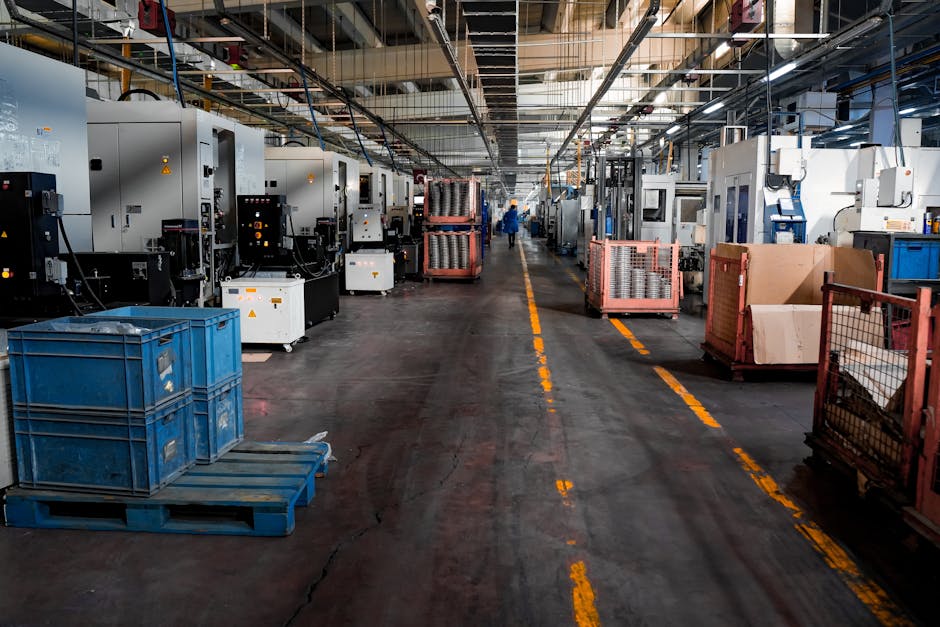
The company, which we'll call PrecisionWorks to maintain confidentiality, manufactured high-tolerance components for aerospace hydraulic systems and defense communication equipment. Their production environment featured a mix of five-axis CNC machining centers, precision grinding equipment, and assembly lines that required just-in-time delivery of hundreds of components to maintain flow. The procurement team of eight specialists managed a complex mix of direct materials, including specialty alloys and pre-machined forgings, alongside indirect items like tooling, abrasives, and maintenance supplies.
Specific pain points included inconsistent supplier performance tracking, where quality data from their quality management system rarely informed sourcing decisions; poor demand forecast accuracy, averaging just sixty-two percent for components with variable usage patterns; and manual RFQ processes that required four to six weeks for complex machined parts. Their ERP system, a fifteen-year-old installation with heavy customization, contained rich historical data but lacked modern analytics capabilities. Engineering change requests, common in aerospace applications, created procurement chaos as buyers scrambled to source modified components without automated BOM comparison tools. The director of supply chain optimization estimated that thirty percent of procurement team time went to expediting late orders and firefighting stockout situations rather than strategic supplier development.
The Implementation Strategy
Rather than pursuing a big-bang transformation, PrecisionWorks adopted a phased approach that prioritized quick wins while building toward comprehensive capabilities. Phase one focused on demand forecasting for their top one hundred components by spend, integrating historical consumption data from their ERP with production schedule information from their manufacturing execution system. They selected a Generative AI Procurement platform that offered pre-built connectors for their specific ERP version and emphasized explainable AI outputs, reasoning that procurement specialists would need to understand model logic to trust recommendations.
The implementation team, comprising the procurement director, IT manager, production planning supervisor, and an external AI implementation consultant, spent the first six weeks on data preparation. They discovered that part master data quality was far worse than anticipated, with twenty-three percent of active SKUs lacking complete lead time information and supplier performance metrics scattered across quality inspection logs, receiving reports, and email folders. A dedicated data cleansing sprint standardized part categories, populated missing fields, and established automated data collection processes to maintain quality going forward. This unglamorous groundwork proved critical to subsequent success.
Phase two, launched in month five, extended AI capabilities to supplier risk assessment and automated RFQ generation. The platform analyzed supplier on-time delivery rates, quality defect trends captured through APQP documentation, and external signals like financial health indicators and geographic risk factors. For new part sourcing, procurement specialists could input technical specifications and the system would generate RFQ packages, suggest appropriate suppliers based on capability matching, and even draft initial outreach emails. Phase three, rolled out in month eleven, added contract compliance monitoring and inventory optimization recommendations, using generative models to identify opportunities for supplier consolidation and suggest optimal reorder points based on demand variability and supplier lead time reliability.
Technical Integration and Platform Architecture
The technical architecture balanced sophistication with pragmatism, recognizing PrecisionWorks' limited IT resources. The core AI platform operated as a cloud service, eliminating the need for on-premise infrastructure, but required secure bidirectional integration with their ERP system and read access to their PLM platform for BOM data. The IT team developed middleware using modern AI development frameworks that handled data transformation between systems, ensuring that AI-generated purchase requisitions could flow directly into ERP workflows while maintaining audit trails and approval hierarchies.
A critical architectural decision involved establishing a "human-in-the-loop" design pattern for high-stakes decisions. While the AI could automatically reorder commodity items within predefined parameters, any recommendation involving new suppliers, significant order value changes, or quality-flagged components required explicit procurement specialist review. This approach built confidence gradually, allowing the team to expand autonomous decision-making as they validated model reliability. The platform's natural language interface proved particularly valuable, enabling procurement staff to query "Why did lead time forecasts increase for titanium forgings?" and receive plain-English explanations citing the specific data patterns the model detected, such as a supplier's recent capacity constraints or seasonal shipping delays.
Integration with their quality management system created a closed feedback loop that continuously improved supplier scoring. When incoming inspection identified defects, that data automatically updated the supplier's quality index within the AI platform, influencing future sourcing recommendations. Similarly, production schedule changes from their Manufacturing Process Automation systems immediately triggered demand forecast updates, allowing the AI to suggest proactive order adjustments before stockouts occurred. This level of Supply Chain AI Integration transformed procurement from reactive to predictive, addressing one of PrecisionWorks' most persistent operational challenges.
Results and Key Metrics
Twelve months after the phase three rollout, PrecisionWorks conducted a comprehensive performance assessment comparing metrics from the year prior to implementation with current state. The results validated their investment and exceeded initial business case projections across multiple dimensions. On-time delivery performance improved from seventy-three percent to ninety-one percent, driven primarily by more accurate demand forecasting and earlier identification of at-risk orders. The AI's ability to detect subtle patterns in supplier behavior, such as consistent two-day delays during month-end periods, allowed procurement to adjust order timing preemptively.
Inventory holding costs decreased by twenty-two percent despite maintaining higher service levels, as the system optimized reorder points and safety stock levels based on actual demand variability rather than rule-of-thumb formulas. Procurement cycle time for new part sourcing compressed from an average of thirty-one days to fourteen days, with the automated RFQ generation and supplier matching eliminating weeks of manual research and email exchanges. Perhaps most striking, the procurement team redirected approximately forty-five percent of their time from transactional tasks to strategic initiatives like supplier capability development and cost reduction projects, directly contributing to a seven percent reduction in total cost of goods sold.
Supplier relationships also evolved positively. With AI-driven forecasts shared proactively, key suppliers reported twenty to thirty percent improvement in their own capacity planning accuracy, creating a virtuous cycle of reliability. The transparency of performance metrics, visible to suppliers through a dedicated portal, fostered collaborative problem-solving when issues arose rather than adversarial finger-pointing. Quality defect rates from top suppliers declined by eighteen percent, which PrecisionWorks attributed partly to the tighter feedback loop between quality data and procurement decisions, incentivizing suppliers to prioritize defect prevention.
Lessons Learned and Best Practices
The PrecisionWorks journey surfaced several lessons that carry broad applicability for mid-sized manufacturers pursuing Generative AI Procurement transformation. First, data quality cannot be an afterthought. The six-week investment in data cleansing, though initially frustrating for stakeholders eager to see AI in action, proved to be the foundation of all subsequent success. Organizations should budget at least twenty to thirty percent of implementation time and budget for data preparation, treating it as enablement rather than overhead.
Second, phased rollouts with clearly defined success metrics maintain momentum and build organizational confidence. PrecisionWorks deliberately chose phase one use cases where AI could demonstrate value quickly without requiring perfect accuracy. Early wins with demand forecasting created champions within the procurement team who advocated for subsequent phases, overcoming the skepticism that often derails digital transformation. Each phase included defined rollback criteria so that if results didn't materialize, the team could pause, diagnose issues, and adjust before proceeding.
Third, cross-functional collaboration proved essential. Procurement couldn't succeed in isolation; production planners needed to trust that AI Production Scheduling recommendations accounted for their constraints, quality engineers needed confidence that supplier risk scoring reflected their inspection data, and suppliers needed to understand how the new system would affect their interactions. Regular steering committee meetings with representatives from each function ensured alignment and surfaced integration challenges early. The companies that struggle most with AI adoption, according to the implementation consultant, are those that treat it as a procurement-only initiative rather than a cross-functional capability.
Fourth, change management and training require sustained investment, not one-time events. PrecisionWorks conducted initial training workshops but found that real adoption accelerated when they designated two procurement specialists as AI super-users who received advanced training and served as internal resources. These champions ran weekly office hours where colleagues could ask questions, developed use case examples from actual scenarios, and captured feedback that informed platform configuration adjustments. Six months post-rollout, they introduced a certification program that validated procurement team members' ability to interpret AI outputs, configure parameters, and identify when to override recommendations, making AI literacy a recognized competency.
Conclusion: Scaling Success and Next Horizons
The PrecisionWorks case study demonstrates that transformative Generative AI Procurement outcomes are achievable for mid-sized manufacturers willing to approach implementation strategically, invest in foundational enablers, and commit to organizational change alongside technology deployment. Their results, from dramatic on-time delivery improvements to substantial inventory cost reductions, illustrate the tangible value that AI brings when properly integrated into advanced manufacturing operations. The lessons they learned, particularly around data quality, phased rollouts, cross-functional collaboration, and sustained change management, provide a roadmap for similar organizations navigating their own digital transformation journeys. As PrecisionWorks looks ahead, they're now exploring how to extend AI capabilities into supplier collaboration platforms, automated contract intelligence, and sustainability tracking, building on the AI Manufacturing Operations foundation they've established. Their experience proves that with thoughtful planning and execution, even resource-constrained manufacturers can harness artificial intelligence to achieve procurement excellence and competitive advantage in increasingly complex global supply chains.


Comments
Post a Comment