Smart Manufacturing AI: Critical Mistakes to Avoid in Your Digital Transformation
The promise of Smart Manufacturing AI has captivated manufacturing leaders worldwide, offering unprecedented opportunities to optimize operations, reduce waste, and enhance product quality. Yet despite the excitement surrounding these technologies, many manufacturers stumble during implementation, wasting millions on initiatives that fail to deliver expected returns. The gap between AI's potential and actual results often stems not from the technology itself, but from avoidable strategic and operational missteps that undermine even the most promising digital transformation efforts.
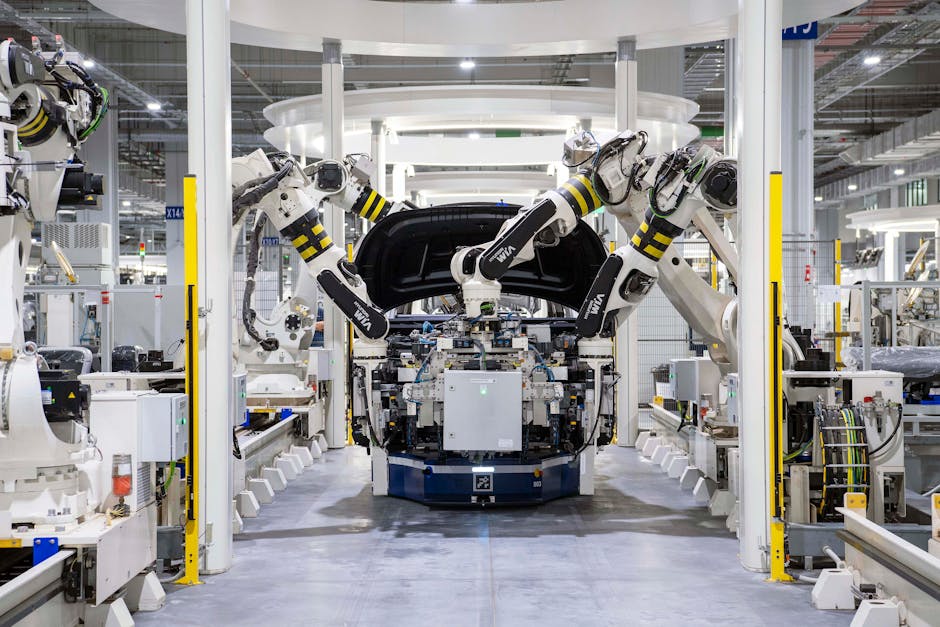
Understanding where manufacturers commonly go wrong with Smart Manufacturing AI initiatives can save organizations from costly failures and accelerate their path to measurable value. From misaligned expectations to inadequate data infrastructure, these pitfalls are remarkably consistent across industries—and remarkably preventable with the right approach. This article examines the most critical mistakes manufacturers make when deploying AI solutions and provides actionable guidance to help your organization avoid these common traps while maximizing your investment in intelligent manufacturing technologies.
Mistake 1: Starting Without a Clear Business Case or Strategic Alignment
One of the most frequent errors manufacturing organizations make is deploying Smart Manufacturing AI without first establishing a compelling business case tied to specific operational objectives. Too often, companies pursue AI implementation simply because competitors are doing it or because executives read about the technology in trade publications. This technology-first approach leads to solutions searching for problems rather than targeted interventions addressing genuine pain points in manufacturing execution systems, supply chain management, or quality control processes.
Without clear alignment to measurable business outcomes—whether that's reducing unplanned downtime by a specific percentage, improving OEE targets, or decreasing scrap rates in critical production lines—AI initiatives lack the focus necessary for success. Manufacturing leaders should begin by identifying specific bottlenecks in their operations: perhaps excessive changeover times in CNC machining centers, inconsistent quality in welding operations, or inventory imbalances that tie up working capital. Only after pinpointing these challenges should teams evaluate how Predictive Maintenance AI, Digital Twin Technology, or other intelligent solutions might address them.
Companies like Siemens have demonstrated the value of this strategic approach by targeting AI deployments at specific manufacturing challenges rather than attempting enterprise-wide transformations without clear objectives. Before investing in any Smart Manufacturing AI platform, conduct a thorough assessment of your current state—map existing processes, identify performance gaps, quantify the financial impact of these gaps, and establish baseline metrics that will later demonstrate ROI. This disciplined approach ensures that every AI initiative contributes directly to strategic manufacturing goals rather than becoming an expensive science experiment.
Mistake 2: Underestimating Data Quality and Infrastructure Requirements
Perhaps no mistake proves more costly than underestimating the data infrastructure required to support effective Smart Manufacturing AI implementations. Many manufacturers assume their existing MES, ERP, and SCADA systems provide sufficient data foundations for AI applications, only to discover that data quality issues, siloed information systems, and inadequate connectivity undermine even sophisticated algorithms. The reality is that AI models are only as good as the data they consume—and most legacy manufacturing environments were never designed with advanced analytics in mind.
Common data challenges include inconsistent sensor calibration across production lines, incomplete maintenance records that lack the detail necessary for predictive models, quality inspection data trapped in paper forms or isolated spreadsheets, and time-stamped information with synchronization issues that make cross-system correlation impossible. Before deploying Industrial IoT Solutions or advanced analytics platforms, manufacturers must invest in data governance frameworks, sensor standardization, edge computing infrastructure for real-time data collection, and integration layers that unify information from disparate systems.
Building a Data Foundation for AI Success
Addressing data infrastructure requirements means more than simply installing additional sensors or upgrading network bandwidth. It requires establishing data quality protocols that ensure accuracy, completeness, and timeliness across all sources feeding AI models. Manufacturers should implement data validation routines at collection points, create master data management processes for critical assets and materials, establish data ownership and stewardship roles within operational teams, and build data lakes or warehouses that aggregate information while maintaining contextual relationships.
Organizations pursuing AI solution development often discover that 60-70% of their implementation effort focuses on data preparation rather than model development. This isn't a sign of inefficiency—it reflects the fundamental importance of data quality in manufacturing AI applications. Companies should budget accordingly, recognizing that data infrastructure investments pay dividends across multiple use cases rather than benefiting only a single application.
Mistake 3: Ignoring Change Management and Workforce Preparation
Technical excellence in Smart Manufacturing AI implementation means little if the workforce lacks the skills, understanding, or willingness to adopt new ways of working. Yet manufacturers consistently underinvest in change management, treating AI deployment as primarily a technology project rather than a fundamental shift in how factory floor personnel, maintenance teams, quality engineers, and production planners perform their jobs. This oversight leads to user resistance, poor adoption rates, and AI systems that operators learn to work around rather than work with.
Successful Smart Manufacturing AI initiatives recognize that shop floor operators possess invaluable process knowledge that algorithms alone cannot replicate. Rather than positioning AI as a replacement for human expertise, leading manufacturers frame these technologies as decision support tools that augment worker capabilities. This requires transparent communication about how AI systems function, what data they analyze, and why their recommendations merit consideration. When maintenance technicians understand how Predictive Maintenance AI identifies equipment degradation patterns, they become advocates rather than skeptics.
Workforce preparation should begin months before technology deployment, including hands-on training with AI interfaces, clear documentation of new workflows and decision-making processes, opportunities for operators to provide feedback that shapes system design, and visible executive sponsorship that signals organizational commitment. Companies like General Electric have found that dedicating cross-functional teams to AI initiatives—combining data scientists, process engineers, and experienced operators—creates better solutions while building internal expertise and buy-in. Without this human-centered approach, even technically sophisticated Smart Manufacturing AI deployments fail to deliver sustained value.
Mistake 4: Pursuing Overly Complex Solutions Before Mastering Fundamentals
The allure of cutting-edge capabilities often tempts manufacturers to pursue highly complex AI applications before establishing foundational competencies. Organizations jump directly to ambitious Digital Twin Technology implementations that model entire production facilities, bypassing simpler use cases that would build team capabilities and demonstrate quick wins. This approach typically results in extended implementation timelines, budget overruns, and stakeholder frustration as promised benefits remain perpetually six months away.
A more effective strategy follows a crawl-walk-run progression, beginning with focused applications that address specific, well-defined problems. Initial Smart Manufacturing AI projects might target a single production line's predictive maintenance needs, a specific quality defect pattern, or energy consumption optimization in a particular facility. These bounded pilots allow teams to develop data pipelines, test AI models against real-world conditions, refine user interfaces based on operator feedback, and demonstrate measurable results that justify expanded investment.
Building Momentum Through Incremental Success
Once foundational capabilities are established through initial pilots, manufacturers can progressively tackle more complex applications. A quality control AI that initially identifies surface defects in painted components might expand to detect dimensional variations, predict process drift before defects occur, and eventually optimize process parameters in real-time. This incremental approach builds organizational confidence, develops internal expertise, and creates a portfolio of proven use cases that accelerate subsequent deployments.
Rockwell Automation's approach to factory automation demonstrates this philosophy—starting with specific machine-level optimizations before integrating plant-wide systems and eventually enabling supply chain visibility. Manufacturers should resist vendor pressure to implement comprehensive platforms immediately, instead insisting on phased implementations that prove value at each stage. This disciplined approach also provides natural checkpoints to reassess strategy, incorporate lessons learned, and adjust course before committing to enterprise-scale investments.
Mistake 5: Failing to Establish Governance and Continuous Improvement Processes
Smart Manufacturing AI systems require ongoing governance, monitoring, and refinement—yet many manufacturers treat deployment as a one-time project rather than an ongoing operational commitment. AI models that perform well initially can degrade over time as manufacturing processes evolve, equipment ages, product mixes shift, or input materials change. Without active model monitoring and retraining protocols, what begins as an accurate predictive system gradually becomes unreliable, eroding user trust and undermining the business case that justified the investment.
Effective governance frameworks establish clear ownership for AI system performance, including designated roles responsible for monitoring model accuracy, investigating prediction errors, coordinating retraining activities, and managing system updates. These frameworks should define acceptable performance thresholds, escalation procedures when systems underperform, and regular review cycles that assess whether AI applications continue addressing priority business needs or require redirection toward emerging challenges.
Continuous improvement processes apply lean manufacturing and six sigma principles to AI operations themselves. Just as manufacturers wouldn't deploy new production equipment and never optimize its performance, Smart Manufacturing AI requires ongoing tuning based on operational feedback. Regular reviews should examine false positive and false negative rates in predictive models, user satisfaction with AI-generated recommendations, the financial impact of AI-driven decisions, and opportunities to expand successful applications to additional production lines or facilities. This operational discipline transforms AI from a static technology deployment into a dynamic capability that evolves with business needs.
Mistake 6: Neglecting Cybersecurity and Operational Resilience
As manufacturers connect previously isolated production equipment to networks and cloud platforms, they create new attack surfaces that demand rigorous cybersecurity protocols. Yet many Smart Manufacturing AI implementations prioritize functionality over security, introducing vulnerabilities that expose proprietary process knowledge, enable production disruptions, or compromise product quality data. The convergence of information technology and operational technology in smart manufacturing environments requires security approaches that protect both digital assets and physical production systems.
Cybersecurity for Industrial IoT Solutions must address unique manufacturing requirements, including real-time operational constraints that limit when security patches can be applied, legacy equipment running outdated operating systems that cannot be easily replaced, and production environments where network segmentation and air-gapping may be necessary to isolate critical systems. Manufacturers should implement defense-in-depth strategies that combine network security, device authentication, data encryption, and behavioral monitoring to detect anomalous activities that might indicate compromise.
Operational resilience extends beyond cybersecurity to ensure Smart Manufacturing AI systems fail gracefully when issues arise. Production environments cannot tolerate single points of failure—if an AI-driven scheduling system becomes unavailable, manufacturing operations must continue using alternative methods. Resilience planning should identify critical dependencies, establish backup procedures, implement redundant systems for essential functions, and regularly test failover scenarios. This operational discipline ensures that AI systems enhance rather than endanger production reliability.
Conclusion: Navigating Smart Manufacturing AI With Strategic Discipline
The transformative potential of Smart Manufacturing AI is real, but realizing that potential requires manufacturers to navigate common implementation pitfalls with strategic discipline and operational rigor. By establishing clear business cases before technology selection, investing in robust data infrastructure, prioritizing change management and workforce development, pursuing incremental wins before complex integrations, implementing strong governance frameworks, and maintaining vigilant cybersecurity practices, organizations can avoid the costly mistakes that derail so many digital transformation initiatives.
Success in smart manufacturing isn't about having the most advanced algorithms or the newest technologies—it's about systematically addressing genuine operational challenges with appropriate tools, building organizational capabilities that sustain long-term value, and maintaining the discipline to learn from both successes and setbacks. As manufacturing becomes increasingly digital and AI-driven, the competitive advantage will belong to organizations that implement intelligently rather than those that simply implement first. For manufacturers ready to pursue digital transformation with strategic clarity and operational excellence, partnering with experienced providers of AI Transformation Services can provide the guidance, tools, and support necessary to navigate this complex journey while avoiding the mistakes that have trapped less-prepared competitors.


Comments
Post a Comment